
Last Modified:
Are your project schedules cluttered? Does it make it hard to focus on key phases? Would you like to hide tasks in Microsoft Project when you need to show just the Development and Testing tasks to stakeholders—without deleting (or restoring) anything else?
In this article, I’ll show you my favorite trick to hide tasks in your Microsoft Project using the built-in “Marked” column: a simple filter that hides tasks temporarily. It’s saved me hours in client meetings and still works flawlessly in Microsoft Project through Microsoft 365 (updated and tested December 2025).
Follow these 7 quick steps below or click here to watch the 2-minute video on my Youtube channel or click the image below.
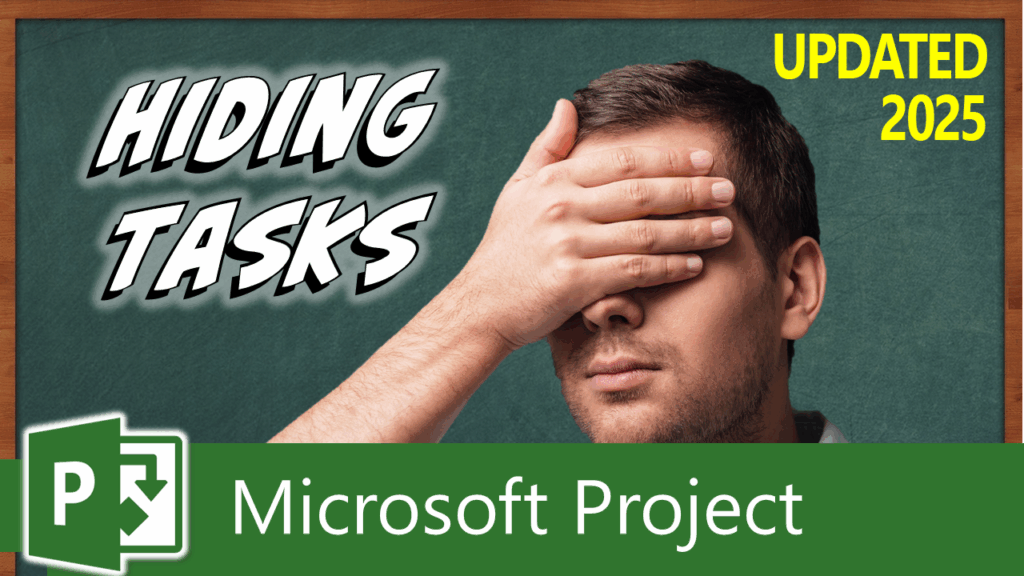
Hide Tasks in Microsoft Project: Understand the Purpose
Imagine you have an important meeting with project stakeholders, and you only want to show them tasks from the Development and Testing section of your project. You will need to hide all other tasks to make the presentation more focused.
Step-by-Step: Hide Tasks Using the Marked Column
- Open your project in Microsoft Project (desktop version).
- Insert the Marked column
Right-click any column header (e.g., Duration) → Insert Column → type “Marked” → select Marked → OK. - Mark the tasks you want to KEEP visible
In the new Marked column, change the cells from “No” to Yes for every task you want to show.
(Tip: You can drag-fill or multi-select rows, then type “Yes” once.) - Apply the filter
Click the dropdown arrow in the Marked column header → uncheck (No) → leave only (Yes) checked → OK.
Only your marked tasks remain visible. - (Optional) Hide the Marked column
Right-click the Marked column header → Hide Column for a completely clean look. - To show everything again
Just press F3 (or View tab → Filter → No Filter).
That’s literally it. No tasks are deleted, nothing is changed permanently, and the filter travels with the file.
This little trick can be a real time-saver when you’re preparing for presentations or meetings. I hope you found this blog post article helpful. If you did, consider subscribing to my YouTube channel for more useful tips and tricks. Don’t forget to hit the notification bell to stay updated on new content. If you have any questions or comments, feel free to share them in the Comment section below. Thanks for reading!
Frequently Asked Questions
Does this hide subtasks too?
Yes—if you mark the parent task “Yes,” subtasks hide with it. For granular control, mark them individually.
How do I unhide everything?
Just press F3 (Clear Filter) or go to View > Filter > No Filter. All tasks reappear instantly.
Will this work in Microsoft Planner or Planner?
The Marked filter is desktop-only (Project 2016+). For web versions, use Groups or export to Excel for filtering.
Alternative: Hide via Outline Levels?
For summary tasks, collapse with the +/- icons (View > Outline > All Subtasks). But Marked is better for non-hierarchical hiding.
Want more tips? Here’s the Latest Posts
-
Why Save a Baseline in Microsoft Project?
One of the most important steps in scheduling is to Save a Baseline. Without a baseline, you will never be able to analyze variance in your projects. In this blog post article, I will teach you how to save a Baseline in Microsoft Project.
-
Assign Resources to Tasks in Microsoft Project Using Two Powerful Methods
Learn the two most effective methods to assign resources to tasks in Microsoft Project. Increase efficiency and ease of use with these techniques.
-
Microsoft Project Task Constraints
There is one right way to set task Project Task Constraints in Microsoft Project, and one WRONG way to do this. In this blog post article, learn the correct way to set a task constraint.
-

Installing and Using Microsoft Project QA Filters – Made Easy
Learn how to install and use seven custom Microsoft Project QA Filters to ensure high-quality and dynamic project schedules. Download the filters now!
-
5/4-9 Work Schedule Setup in MS Project Guide
Set up a 5 4 9 work schedule in Microsoft Project correctly. Includes the Duration calculation trick used by US Federal agencies.
-

Advanced Use of the Nonworking Time Calendar
Discover the power of Microsoft Project’s Nonworking Time Calendar in troubleshooting task scheduling problems caused by resource calendars. Gain valuable insights and enhance your project management skills through engaging and effective training.
-
Nonworking Time Calendars in Microsoft Project (How They Work and Why They Matter)
Learn how Nonworking Time Calendars work in Microsoft Project, how they differ from the Project Calendar, and why correct setup is critical for accurate scheduling and Gantt charts.
-
Add Company Holidays to MS Project (2024)
Quickly add company holidays to MS Project with our expert step-by-step guide. Avoid scheduling errors & keep projects on track.
-

Adding Company Holidays in Microsoft Project
In this article, you will learn the tips and tricks for adding company holidays in Microsoft Project, such as Christmas Day.